Home Office Acoustics — Poland
Reduce Echo in Your
Remote Work Room
Practical information on room layout, soft furnishings, and panel placement to reduce reverberation in home office spaces across Poland.
The Problem
Why Home Offices Echo
Most residential rooms in Poland were not designed for extended voice calls or recording. Hard walls, wooden floors, and sparse furniture create long reverberation times that affect call clarity and concentration.
Hard Parallel Surfaces
Concrete or plaster walls facing each other reflect sound repeatedly. In a typical 12–18 m² room with no soft materials, reverberation time can exceed 0.8 seconds — well above the 0.4 s threshold recommended for speech intelligibility.
Lack of Soft Mass
Rooms furnished with only a desk, monitor, and chair have minimal porous surfaces. Sound energy bounces rather than being absorbed, which is why voice calls often sound hollow or have a noticeable delay effect for the other party.
Panel Gaps and Room Shape
Square and rectangular rooms amplify standing waves at specific frequencies. Corner frequencies between 60 and 250 Hz build up bass resonance, while mid-range reflections from glass windows produce a bright, fatiguing quality.
Approaches
Three Ways to Treat a Room
Each approach addresses a different aspect of room acoustics. Used together, they reduce reverberation without requiring structural changes or professional installation.
Room Layout
Positioning your desk away from walls, angling furniture to break symmetry, and distributing objects around the room diffuse reflections before they compound. Layout changes cost nothing and can reduce RT60 by 15–25%.
Soft Furnishings
Upholstered chairs, thick curtains, bookshelves filled with books, and area rugs are the most accessible tools. A single large area rug on a wooden floor can cut floor reflection by roughly 60% at mid frequencies.
Acoustic Panels
DIY or commercial fabric-wrapped panels placed at first reflection points on walls and ceiling add controlled absorption. Panel density, thickness, and placement angle determine effectiveness at different frequency ranges.
Articles
Detailed Guides

How Soft Furnishings Reduce Echo in a Home Office
Rugs, curtains, upholstered chairs, and bookshelves absorb sound energy that would otherwise bounce between hard surfaces. This guide covers material choices and placement.
Read article →
Acoustic Panel Placement for Home Office Rooms
Where you mount an acoustic panel matters as much as what it is made of. First reflection points, corners, and ceiling placement each serve a different purpose in controlling room sound.
Read article →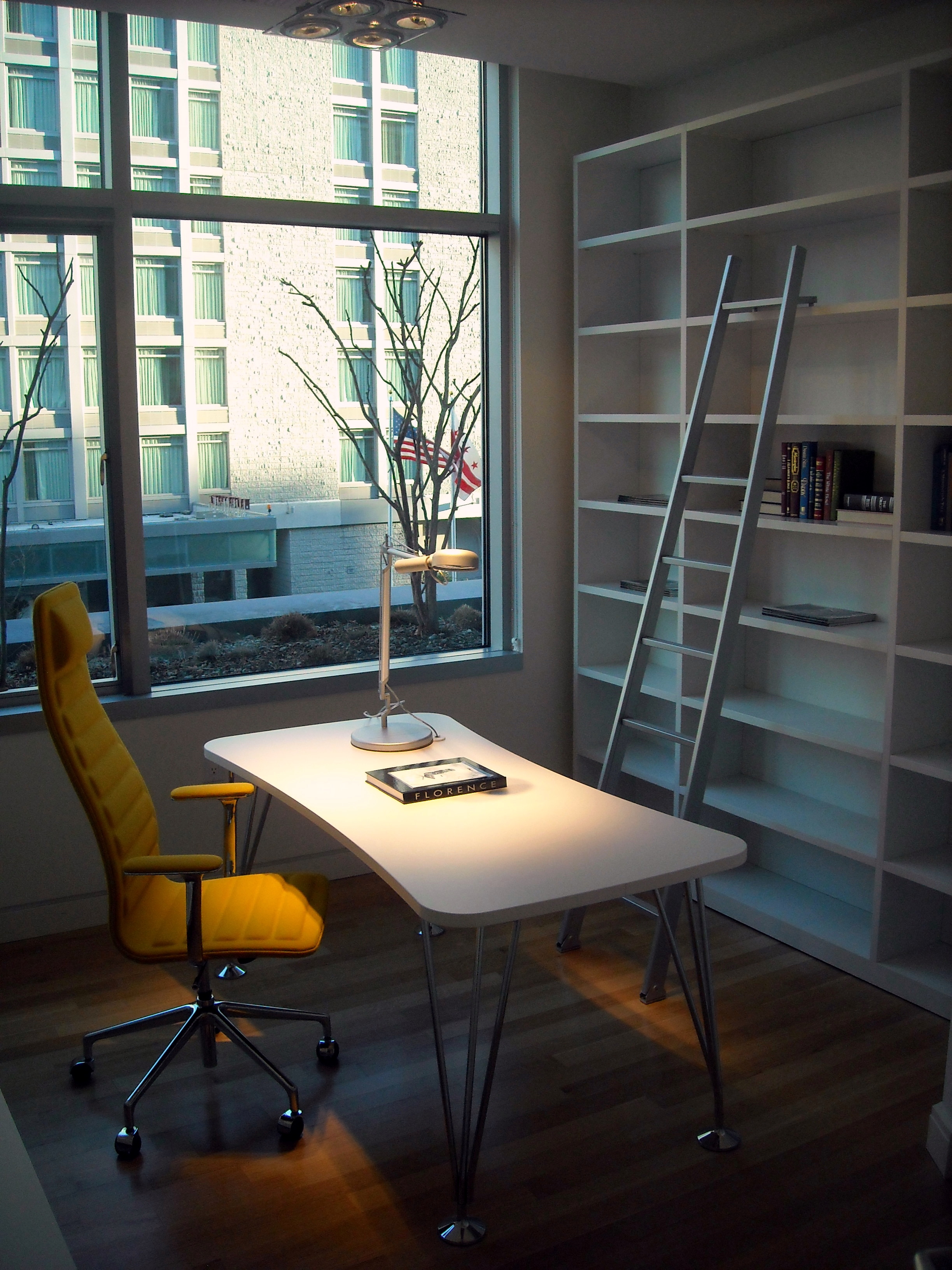
Room Layout Strategies to Reduce Reverberation in Poland
Polish apartments built between 1970 and 2010 share predictable acoustic problems. This article explains how to approach layout in a typical 10–20 m² room.
Read article →Polish Context
Acoustic Conditions in Polish Housing
The construction methods and materials common in Polish residential buildings create specific acoustic environments that influence how rooms should be treated.
Panel Housing (Wielka Płyta)
Prefabricated concrete panel buildings, common across Polish cities from the 1960s to 1990s, have high-density walls that reflect sound well. Internal surfaces are typically bare plaster or painted concrete, offering minimal inherent absorption. Rooms in these buildings tend to have higher reverberation times compared to newer construction with internal insulation layers.
Newer Construction and Renovation Trends
Post-2000 residential buildings in Poland more frequently include acoustic insulation between floors and internal partition walls, though this primarily targets airborne sound transmission rather than room acoustics within a single space. Open-plan renovations that remove internal walls often increase room volume and reduce natural diffusion, which can worsen echo.
Floor Materials
Many Polish homes have replaced carpet with laminate or engineered wood flooring since the 1990s. While easier to maintain, these surfaces reflect high-frequency sound strongly. A well-chosen area rug, placed under the workspace area, is one of the most effective single interventions in such rooms.
Window Size and Glazing
Energy renovation programs, including Poland's Czyste Powietrze subsidy scheme, have led to widespread replacement of older windows with double or triple glazing. Larger glazed areas — common in balcony rooms converted to home offices — create significant reflection surfaces that benefit from treatment with heavy curtains or exterior roller blinds.