Room layout affects acoustics before any acoustic treatment is added. The position of the desk, the orientation of the speaker relative to walls and windows, and the distribution of objects around the room all determine which reflection paths carry the most energy and where treatment will have the greatest effect.
In Polish residential buildings, a few room types repeat across the housing stock: the converted balcony room with one large glazed wall, the narrow long room of a typical block-era apartment, and the square second bedroom. Each has a characteristic acoustic problem that layout can partially address.
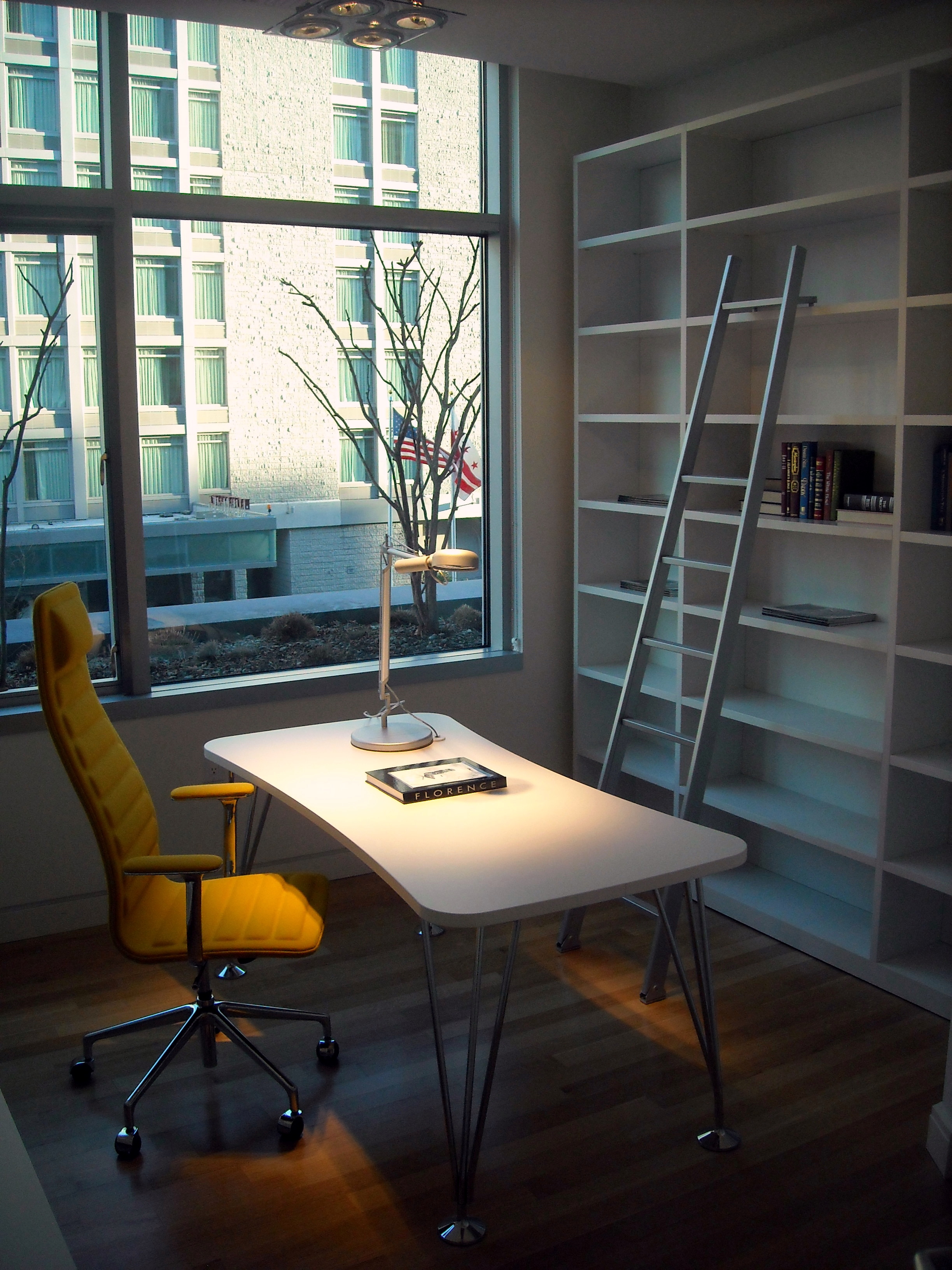
Desk Orientation and Distance from Walls
Placing a desk directly against a wall — the most space-efficient arrangement — puts the speaker in the position where reflections from the wall behind the monitor arrive at very short delays. Delays of less than 30 milliseconds are perceived as colouration of the voice rather than a discrete echo, making the room sound hollow or boxy rather than reverberant. Pulling the desk 30–60 cm away from the wall lengthens the reflection path and changes the character of the room acoustics from colouration to a softer, more manageable early reflection.
Facing the wall versus facing into the room
Both orientations have acoustic trade-offs. Facing the wall places the speaker's back toward the largest open area of the room, meaning back-wall reflections travel the full room length. Facing into the room allows the speaker to see the room but places the back wall at close range behind the chair. In practice, either orientation works when combined with appropriate panel placement. Facing the wall is generally more common in Polish home offices due to space constraints in rooms of 10–15 m².
The Narrow Long Room (Typowy Korytarzowiec)
Many apartments in blocks built under the Wielka Płyta system have rooms with an aspect ratio of roughly 1:2 — for example, 3 m × 6 m or 3.5 m × 7 m. These proportions create strong axial modes along the long axis of the room. Sound reflects between the two short walls with high energy and a predictable frequency response that depends on the room length.
Layout approaches for narrow rooms:
- Position the desk toward one end of the long axis rather than in the middle. The centre of the room is where standing wave nodes and antinodes are most pronounced.
- Place bookshelves or furniture along the long walls to break up the parallel flat surfaces that sustain axial reflections.
- Use a heavy curtain or bookshelf to effectively shorten the room by dividing it visually and acoustically — particularly useful if only part of the room is used as the office area.
The Converted Balcony Room
Since the 1990s, many Polish residents have enclosed their balconies to create additional enclosed space, often used as a home office. These rooms are typically 2–3 m deep and 3–4 m wide, with a single wall that is largely or entirely glazed. The glass wall is a near-perfect sound reflector and cannot be treated with panels or paint. Layout and window treatment address the problem instead.
Glazed wall strategy
- Do not position the desk directly facing the glass wall — this puts the primary reflection directly in front of the microphone.
- Position the desk with the glass wall to the side. A heavy curtain on the glass then functions as a side wall treatment.
- If the glass faces east or west, morning or afternoon light is likely. A roller blind plus a secondary heavy curtain handles both light control and acoustics.
The Square Second Bedroom
Rooms with equal or near-equal dimensions — common in the block-era second bedroom — have the worst axial mode distribution because the same frequencies build up along both horizontal axes. The room accumulates bass energy at the same frequencies in two directions simultaneously.
This is primarily a problem for low-frequency sound. For voice calls, where the relevant range starts above 80 Hz, the practical impact is a slightly uneven low-frequency response. Layout adjustments help by ensuring that the desk is not in the geometric centre of the room — where multiple standing waves reinforce each other — but offset toward one wall.
Object Distribution and Asymmetry
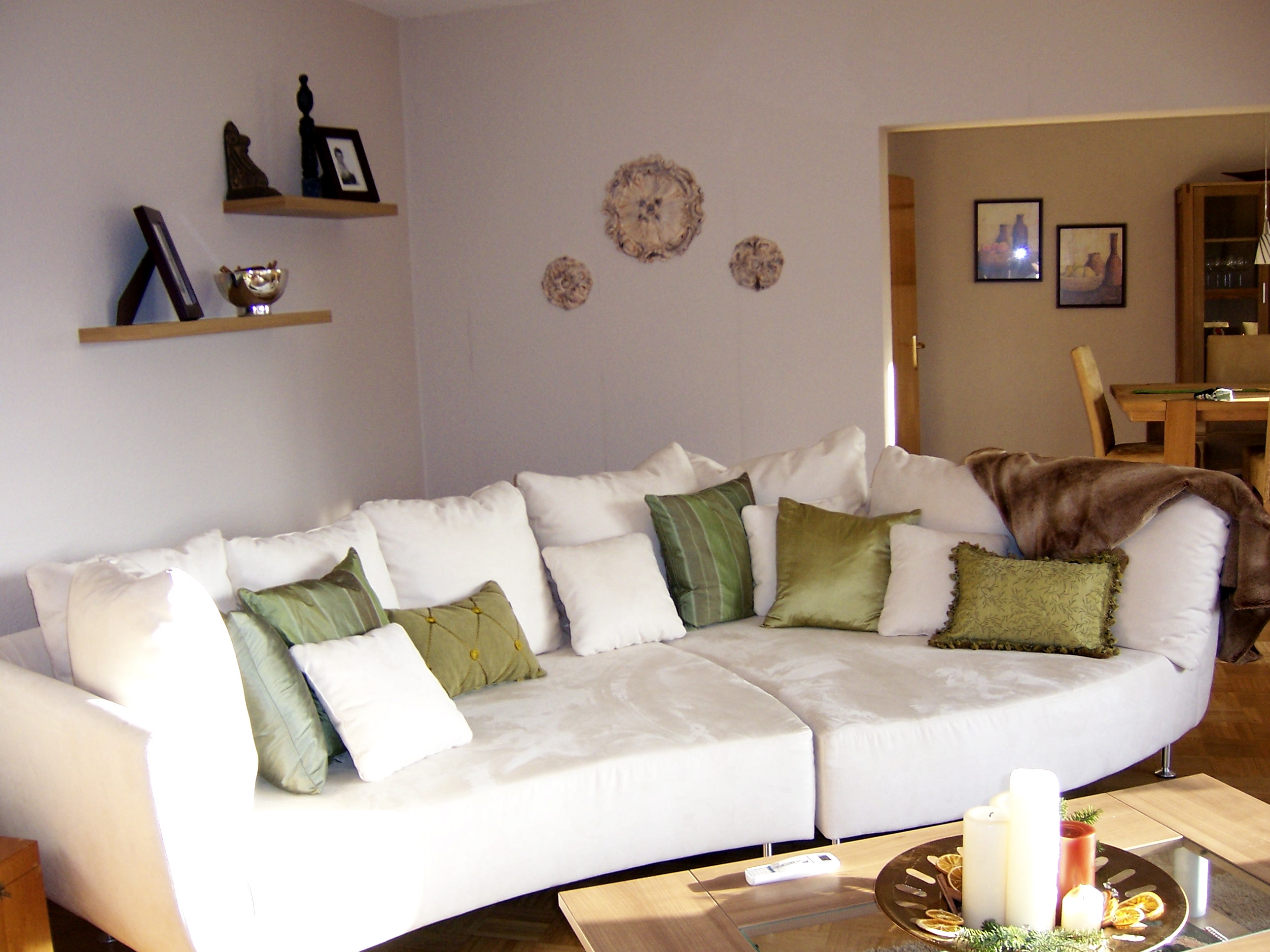
A bare room with symmetrically placed furniture on opposite walls creates mirror-image reflection paths. Sound from the speaker reaches both side walls at roughly equal distances and returns with similar amplitude, which reinforces a narrow-band colouration. Distributing objects asymmetrically — a bookshelf on one side, a wardrobe on the other — breaks the symmetry and scatters reflections across more directions.
Items that contribute to asymmetric distribution without requiring dedicated placement effort:
- Plants on one side of the room
- A floor lamp or coat stand in one corner
- A printer or filing cabinet on a different wall than the bookshelf
- A framed picture or textile art at an angle on one wall
Ceiling Height and Vertical Reflections
Standard ceiling height in Polish residential buildings is 2.55 m in block-era construction and 2.65–2.8 m in post-1990 buildings. At these heights, the ceiling reflection delay is short — between 8 and 16 ms for a person seated at a desk. Ceiling reflections in this delay range blend with direct sound and affect the tonal quality of speech rather than producing a distinct echo.
The most effective layout response to a low ceiling is to position the desk so that the primary ceiling reflection falls over the desk surface rather than over the microphone position. Desk placement closer to the centre of the room (rather than against a wall) increases the path length to the ceiling and to the far wall simultaneously, reducing the amplitude of both reflections.
Combined Layout and Treatment Sequence
For a new home office setup in a typical Polish apartment, a practical sequence is:
- Choose desk orientation based on the room's longest axis and window position.
- Pull the desk 30–50 cm from the wall it faces, if space allows.
- Place a rug under and around the desk area.
- Add heavy curtains to any window walls.
- Fill at least one bookshelf fully with books and position it on the most reflective bare wall.
- Identify first reflection points using the mirror method and place panels there.
Layout changes and soft furnishings (steps 1–5) typically reduce reverberation time by 30–50% in an untreated room. Acoustic panels (step 6) then address the remaining targeted reflections more precisely than any arrangement of furniture can.
Information on this page is for general guidance only. Acoustic conditions vary between rooms. Last updated: May 2026.